

For Business Owners
The Profit Pilot 7-Lever System
You don’t have to double your sales to double your profit. Every business runs on seven measurable levers. Improve each one by just 10 percent, and the gains multiply.
Small Wins That Compound
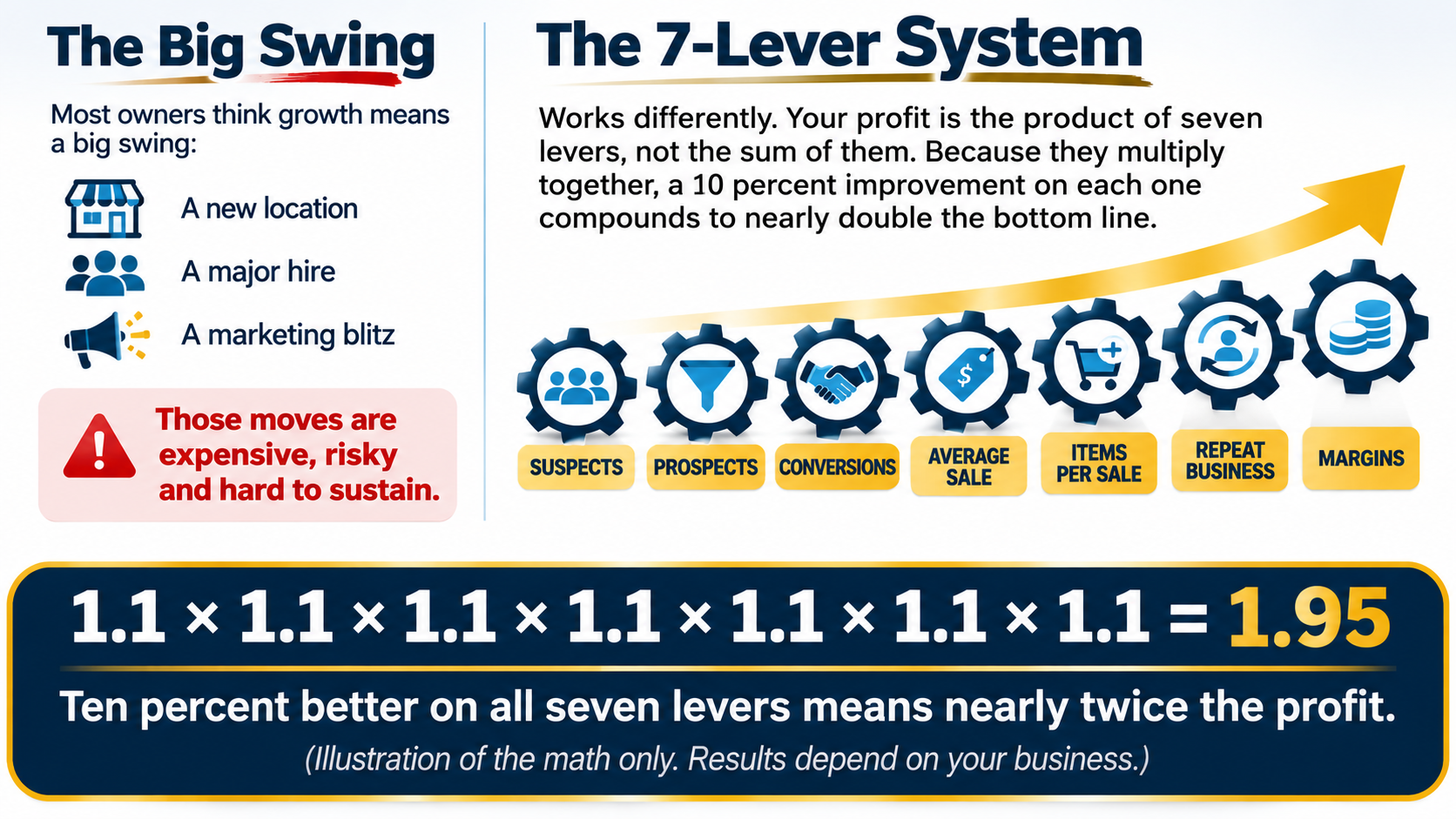
TheSeven LeversEvery Business Runs On
The first three levers grow your number of customers. The next three grow the value of each customer. The last one keeps more of every dollar you make.

The number of people who know your business exists. How we move it: SEO, your Google Business Profile, referrals, content and ads.

How many of those people become real, qualified leads. How we move it: lead magnets, automated follow-up and easy scheduling.
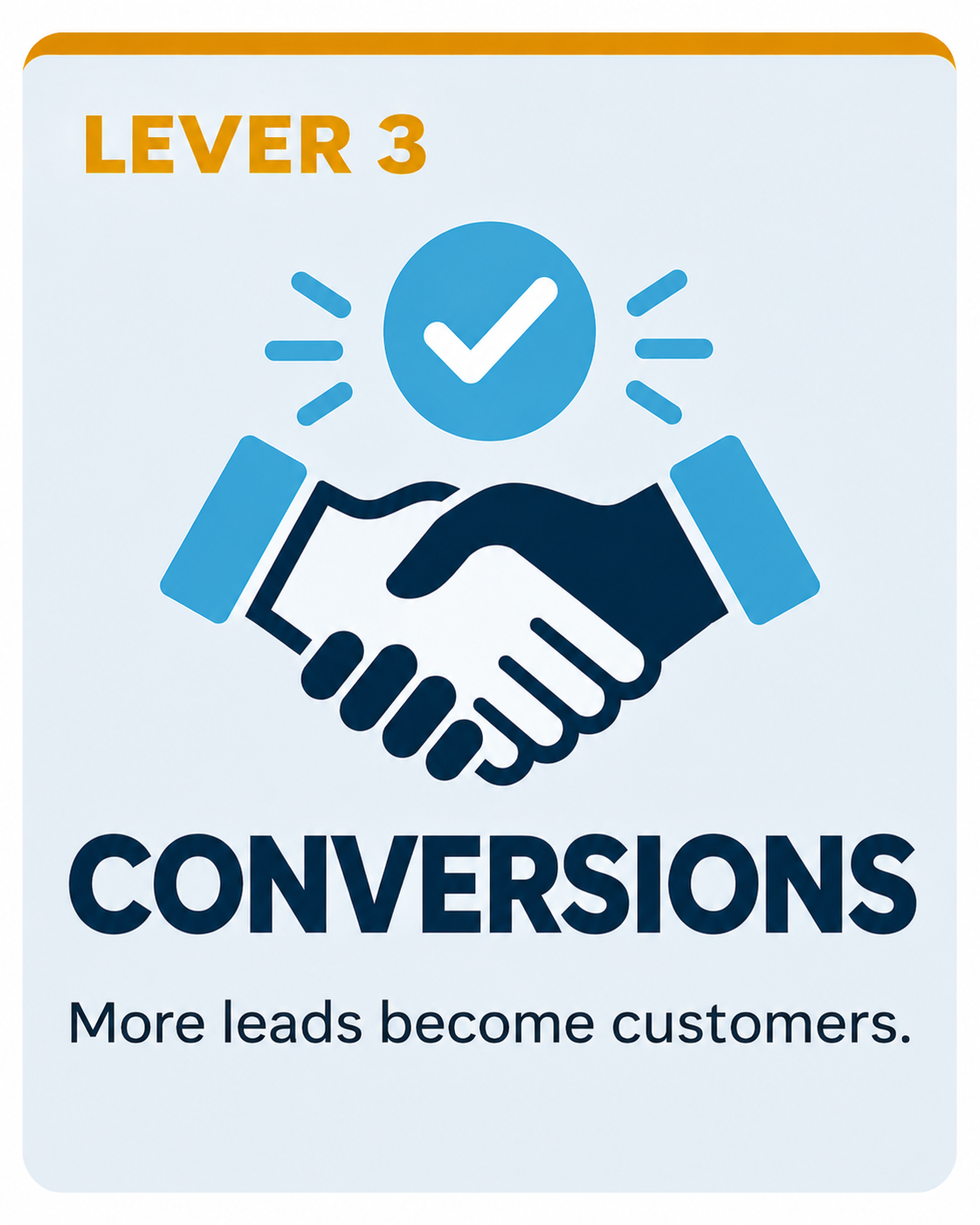
How many leads become paying customers. How we move it: a clear sales process, consistent follow-up and better answers to common objections.

The dollars per transaction. How we move it: premium packages and value-based pricing.

How much a customer buys at once. How we move it: complementary products and services offered at the right moment.
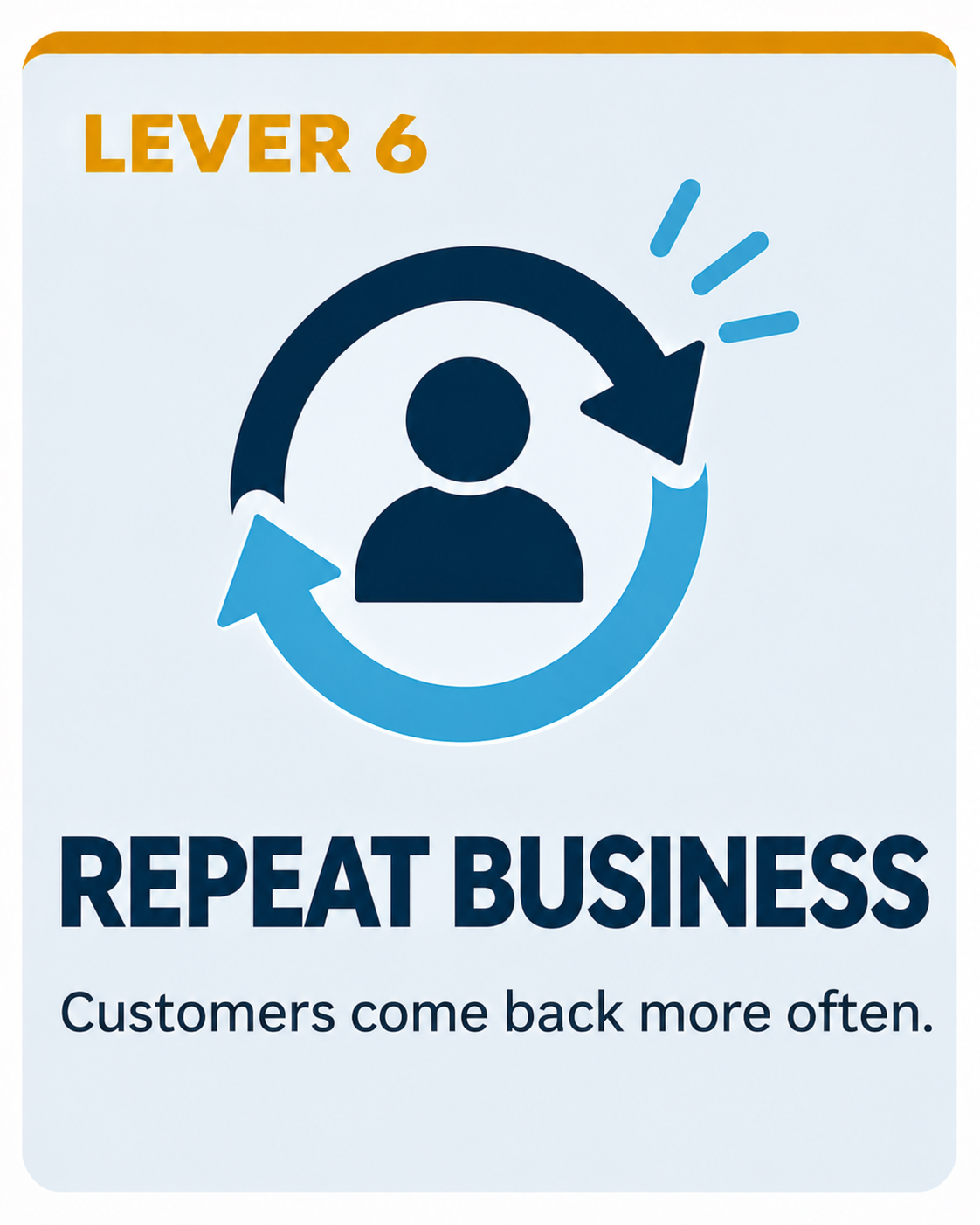
How often customers come back. How we move it: memberships, monthly plans and annual programs.
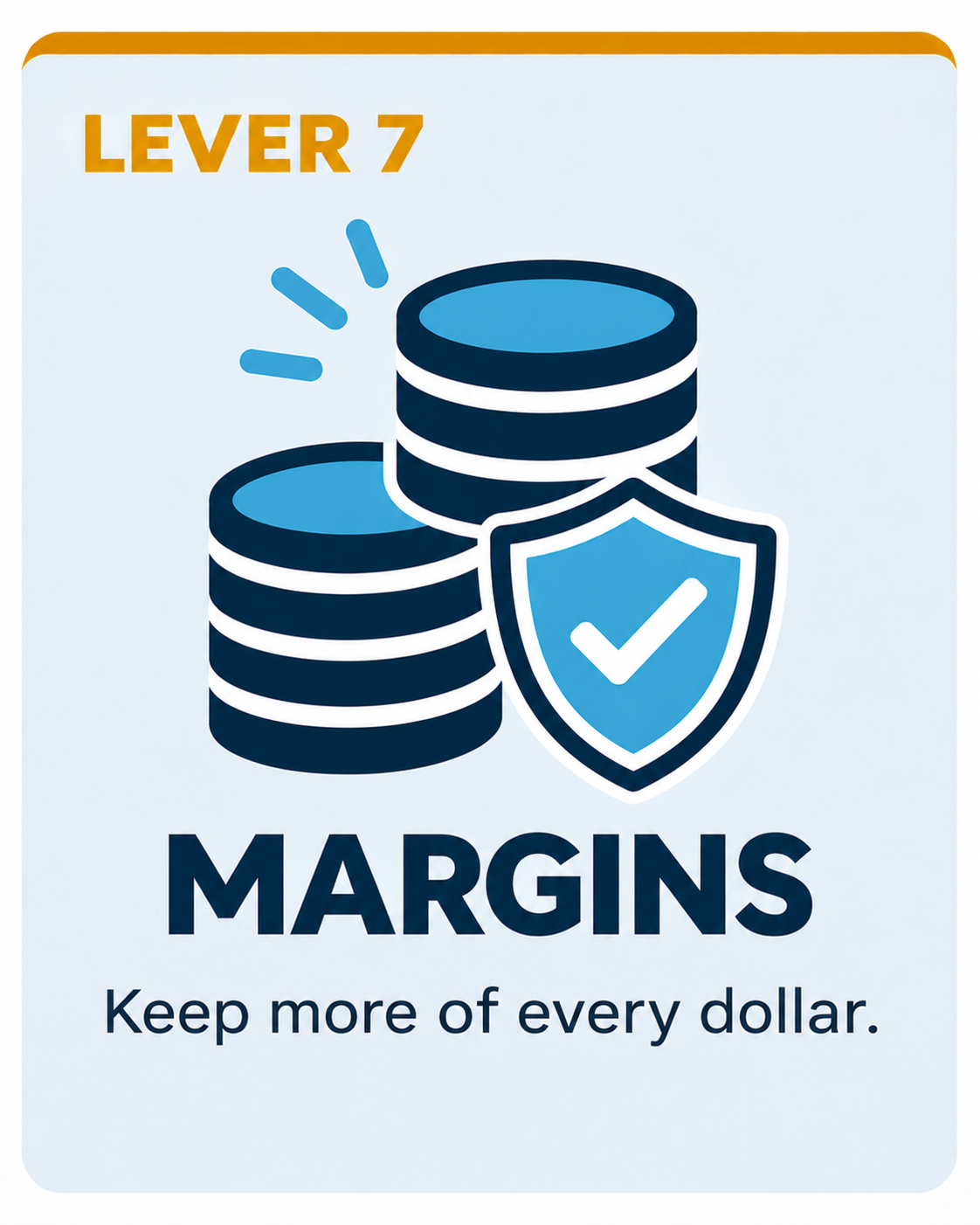
How much of every dollar you keep. How we move it: process improvement, automation, vendor discipline, and expense control.
The Discipline: One Lever at a Time
We don’t try to fix everything at once. Each period, we pick the one lever with the most room to grow, set a 10 percent target, assign an owner, and measure the result. Then we move to the next lever.
Fast levers like conversions get a shortclock. Slower levers like repeat business and margins get a longer one. Small wins, in sequence, add up.
1. Measure
Score your business on all seven levers using your real numbers.
2. Focus
Choose the one lever with the biggest upside right now.
3. Act
Set a 10 percent target with clear owners, deadlines and next steps.
4. Repeat
Re-measure, lock in the gain and move to the next lever.

Built on Clean Books
and Smart Technology

You can’t improve what you can’t measure. Every lever is tracked against your actual financials, so it starts with accurate, current books. We use QuickBooks and AI-powered tools to do the heavy lifting faster and at lower cost, with every number reviewed by a real person before it reaches you.
Where the 7-Lever System Fits
- Foundation: clean, current books every month. That’s the data the levers are measured against.
- Growth: the 7-Lever System installed and measured, with a lever scorecard and regular strategy sessions with Jeff.
- Tax planning: keeps more of what the levers produce, through The No-Surprise Tax Year or a full Tax Flight Path.
So You Can Exit Rich

More profit doesn’t just mean more income this year. Buyers pay for a business based on what it earns. Every lever you improve today makes your business worth more on the day you decide to sell.
Most owners who never work on these levers end up with fewer options at the finish line. Working them over time, even years before you plan to sell, is what turns a job you have to show up for into an asset someone else will pay well for.
Grounded in a Proven Framework
The seven levers come from Pete Williams’ book Cadence, a proven business growth model. What makes it the Profit Pilot System is how we run it: real numbers, one focus lever at a time, and technology that keeps the work fast and affordable.
Common Questions
About the 7-Lever System
What is the Profit Pilot 7-Lever System?
It’s a way to grow profit by improving seven measurable parts of your business by about 10 percent each, one at a time. Because the levers multiply together, small gains compound into big results.
Do I need to improve all seven levers at once?
No. We focus on one lever at a time, the one with the most room to grow, then move to the next.
What does it cost?
The 7-Lever System is part of our Growth service, about $1,099 per month. It builds on Foundation bookkeeping at $599 per month, because the levers are measured against clean books.
What kind of business is this for?
Established small and mid-sized businesses with real revenue that want to grow profit and build a business worth more when it’s time to sell.
How do I get started?
Book a free 30-minute Tax Strategy Fit Call. It’s a short conversation with Jeff to find out whether working together is a fit, and what the next step would be.
Ready to Find Your First Lever?
Start with the free guide, or book a 30-minute Fit Call to see if we’re a fit.